As of 13 Aug 2021, Polygon is the third largest blockchain with $5.66Bn TVL with 46 protocols running on it.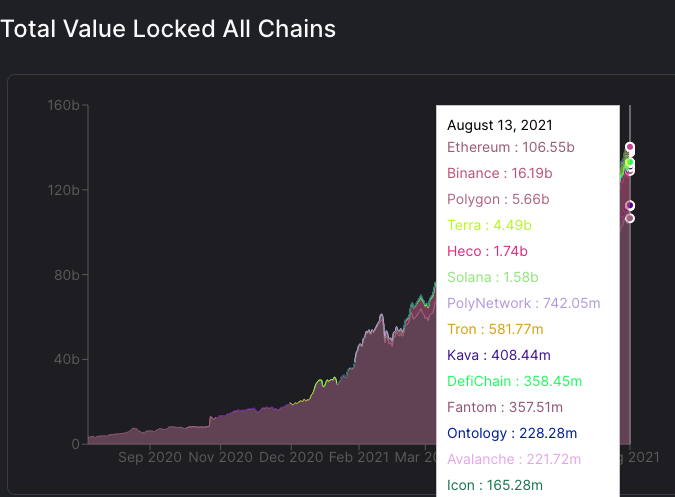
Even though it is growing rapidly, it is still 19 times smaller than market leader Ethereum, and about a third the size of Binance Smart Chain.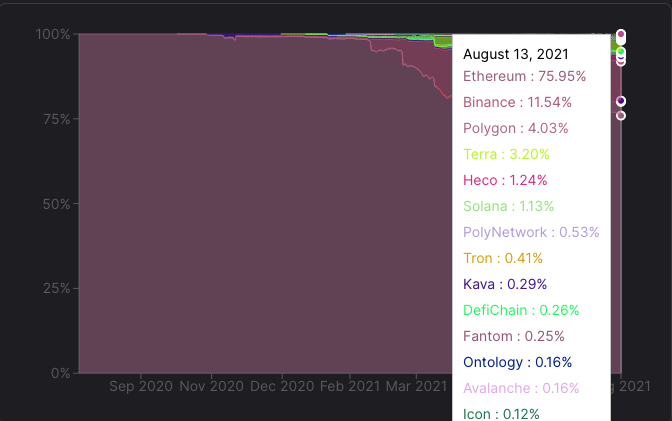
Polygon has always been attractive to developers and protocols due to its commitment to extremely cheap gas fees. To put things into perspective, the cheapest transaction on Ethereum costs roughly around $2USD these days (if you’re lucky); whereas on Polygon network, it costs $0.0005USD. Yes, that is 0.05 cents, in other words, 4000x cheaper.
The brilliance of Polygon lies in its ability to maintain high standards of usability whilst keeping fees astonishingly low. And such standards has not been missed by Defi bluechips. Platforms like Aave, Curve, and SushiSwap, have all set up their satellite shops there, driving the utility value of Polygon even higher.
As of 2021, Polygon has a thriving ecosystem.
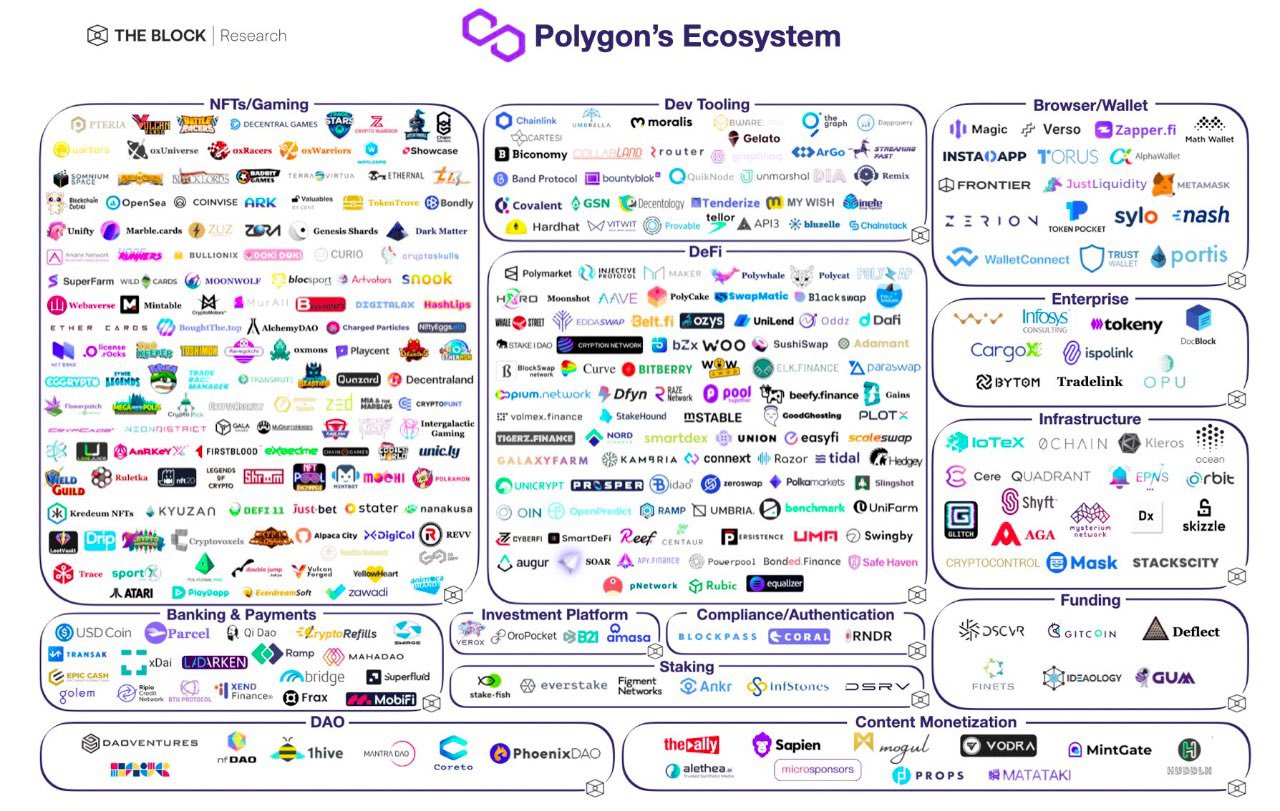
The following is a list of top Dapps on Polygon Network.
For borrowing and lending
- AAVE: With over 2 billion dollars on stored value, AAVe is probably the most used and well known DeFi dapp on both Polygon and Ethereum, can be used to lend and borrow multiple tokens (wBTC, wETH, USDC, USDT, DAI, AAVE, MATIC), while earning interest.
- QiDao
- SushiSwap Kashi Lending
- C.R.E.A.M Finance
Yield-Aggregators
- Adamant Finance: Adamant is a yield optimizer platform that provides >users with an easy and safe way to automatically compound their tokens. >Adamant currently has over 150 valuts where users can deposit their LP >tokens, which are then automatically compounded into more LP tokens.
- Beefy Finance
- Polycat
- Autofarm
Exchanges
- QuickSwap: Next-gen Layer 2 DEX. Trade at lightning-fast speeds with near->zero gas fees.
- SushiSwap
- 1Inch
Liquidity Pools
- Curve Finance: Curve is an exchange liquidity pool on Ethereum (like >Uniswap) designed for: extremely efficient stablecoin trading low risk, >supplemental fee income for liquidity providers, without an opportunity cost.
- Quickswap
- SushiSwap
- Balancer
Porfolio Tracker
- DeBank: DeBank is a multichain portfolio tracker that allows you keep >track of your own and other peoples portfolios across multiple networks
- Zapper
NFT + Gaming
- Decentraland: Decentraland is a virtual game world run by its users. >Every piece of land and every item in the virtual land is a non-fungible >token. Some of them sell for thousands of dollars.
- Decentral.games
- Aavegotchi
- Cometh
Bridges
- Polygon Bridge: The Polygon Bridge is the main bridge between the >Ethereum network and the Polygon network. Allows user on the Ethereum network >to lock their tokens in a contract which then mints an equivalent amount on >the Polygon network. (all fees, regardless of the bridge direction, are paid >in ETH from the Ethereum network)
- xPollinate
- OrbitBridge
Challenges ahead
One of Polygon’s biggest challenge in the months and years ahead is Ethereum’s layer 2 rollouts.
Arbitrum is set to roll out in this month (August 2021). Optimism, on the other hand, was initially scheduled for a roll out in July 2021, but was delayed.
The fate of Polygon, it seems, is largely dependent on whether those Eth2.0 solutions successfully reduces gas fees to a level that is comparable with Polygon.
However, not all would agree with such a view. Polygon bulls believe that Polygon would always be a mainstay of the Ethereum ecosystem, as a reduction of Eth gas will result in a rise in demand for Eth, thus driving gas price back up. In such a situation, Polygon would always be a viable alternative.